
Promoting public understanding of
Alan Turing’s continuing influence in Computing
Celebrating Alan Turing’s first and foremost idea
In 1936, Alan Turing’s seminal paper ‘On computable numbers, with an application to the Entscheidungsproblem’ was published by the London Mathematical Society. Ninety years on, the significance of the work done by Turing remains undiminished. It occupies a unique position of ongoing relevance in the fields of symbolic logic, number theory, problem complexity, computer science and more. In wider social terms, its impact on the development of computing is without parallel.
Defining the Turing Machine
A blueprint for programmable computers
What’s provable and what is not
Logic and limitations of machines
Watch the introductory video below
Turing Machine Challenge - Get Involved

We are passionate about Empowering People and creating Pathways into Tech. The initiative includes a focus on STEM for Women and champions women in tech, which is part of the museum's broader mission. Opportunities to participate begin with the "Build a Turing Machine Open Challenge," a design competition intended to unleash creativity. This participatory element is crucial for partnering with employers and educators and building a vibrant community.
Closing date is 31st October 2026
Academic Engagement & Conference
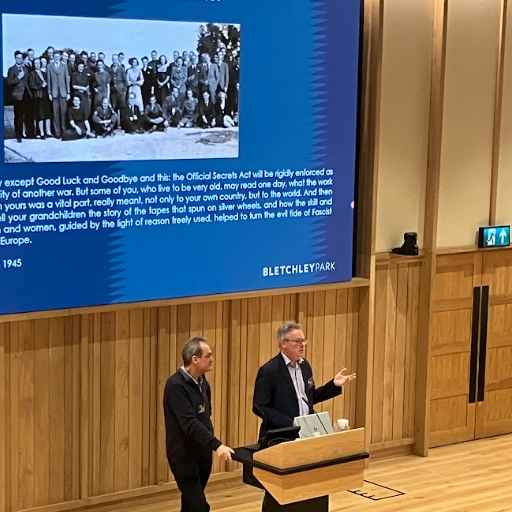
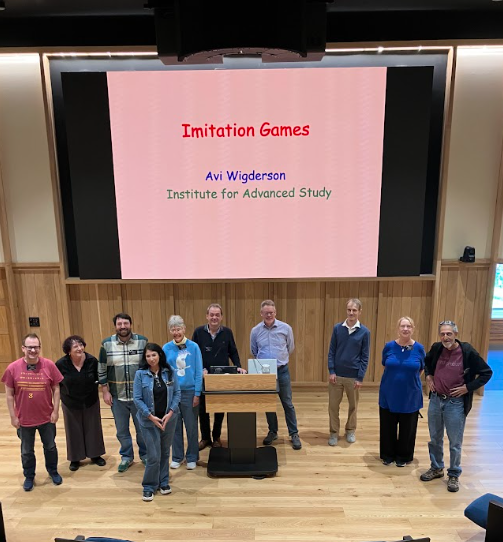
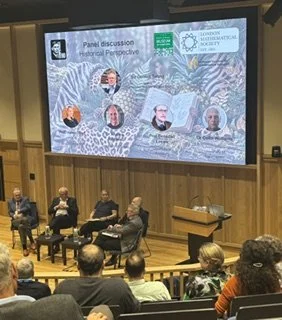
On the 16th-18th of September 2026, TNMoC and LMS co-hosted the International Computable 90 Conference at Bletchley Park. This three-day gathering served as the flagship launch for the Computable90 programme and marked the anniversary of Alan Turing’s seminal 1936 paper "On Computable Numbers." By bringing together world-leading researchers, academics, and AI industry professionals, the event explored how Turing's foundational logic continues to shape computational complexity, mathematical logic, and the future of artificial intelligence.
World-Class Speakers and Insights
The conference featured an impressive line-up of globally renowned experts who entertained their audience with fascinating lectures.
Professor Rod Downey (Victoria University of Wellington): Kickstarted the sessions by tracking the 1936 paper's origins and its profound architectural impact on modern logic, mathematics, and computer science.
Professor Verónica Becher (University of Buenos Aires): Presented on "A Note on Normal Numbers," reconstructing and correcting an unpublished 1937 manuscript found written on the back of a copy of his masterpiece.
Professor Michael Rathjen (University of Leeds): Explored "Turing's thesis and beyond," illustrating how Turing's Princeton PhD thesis pioneered methods to surmount Gödelian incompleteness.
Professor Julia Knight (University of Notre Dame): Demonstrated how Turing's 1936 concepts serve as the mathematical blueprint for modern devices like cell phones, sharing new joint work on the Farey graph and the complexity of its models.
Professor Juliet Floyd (Boston University): Addressed how Turing’s work brings the human into the heart of computation, exploring the autonomy of mathematics and identifying limits that current AI methods may never attain.
Professor Alexandra Shlapentokh (East Carolina University): Explored advanced mathematical connections regarding Hilbert’s 10th problem, decidability, and the ongoing algorithmic quest over rational numbers and big rings.
Professor Avi Wigderson (IAS Princeton): Delivered two sessions, including a special public lecture on the Thursday evening titled "Reading Alan Turing", followed by a Friday keynote showing how variants of Turing's 1950 "Imitation Game" have revolutionised modern cryptography, privacy, and pseudorandomness.
Programme Highlights
Beyond individual lectures, the event also featured two marquee panel sessions. A dedicated Decidability panel moderated by Dr Paul Shafer took place on day one, while a Historical Perspective panel led by Sir Dermot Turing on day two sparked vibrant debates on how Turing’s philosophies shaped codebreaking history, the architecture of human thought, and today's rapid AI expansion.
The conference also shone a light on the next generation of talent by providing Early Career Researcher (ECR) bursaries, funded jointly by TNMoC and LMS. These grants allowed emerging academics to network with field leaders and present their own findings during a dedicated lunchtime poster session. On the final day delegates enjoyed exclusive access to explore the historic grounds of Bletchley Park and take guided tours of TNMoC's unmatched collection of working vintage computing systems.