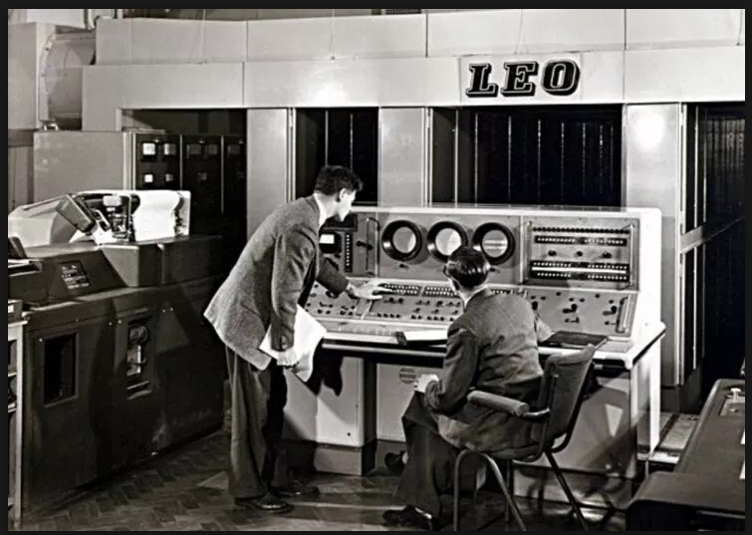
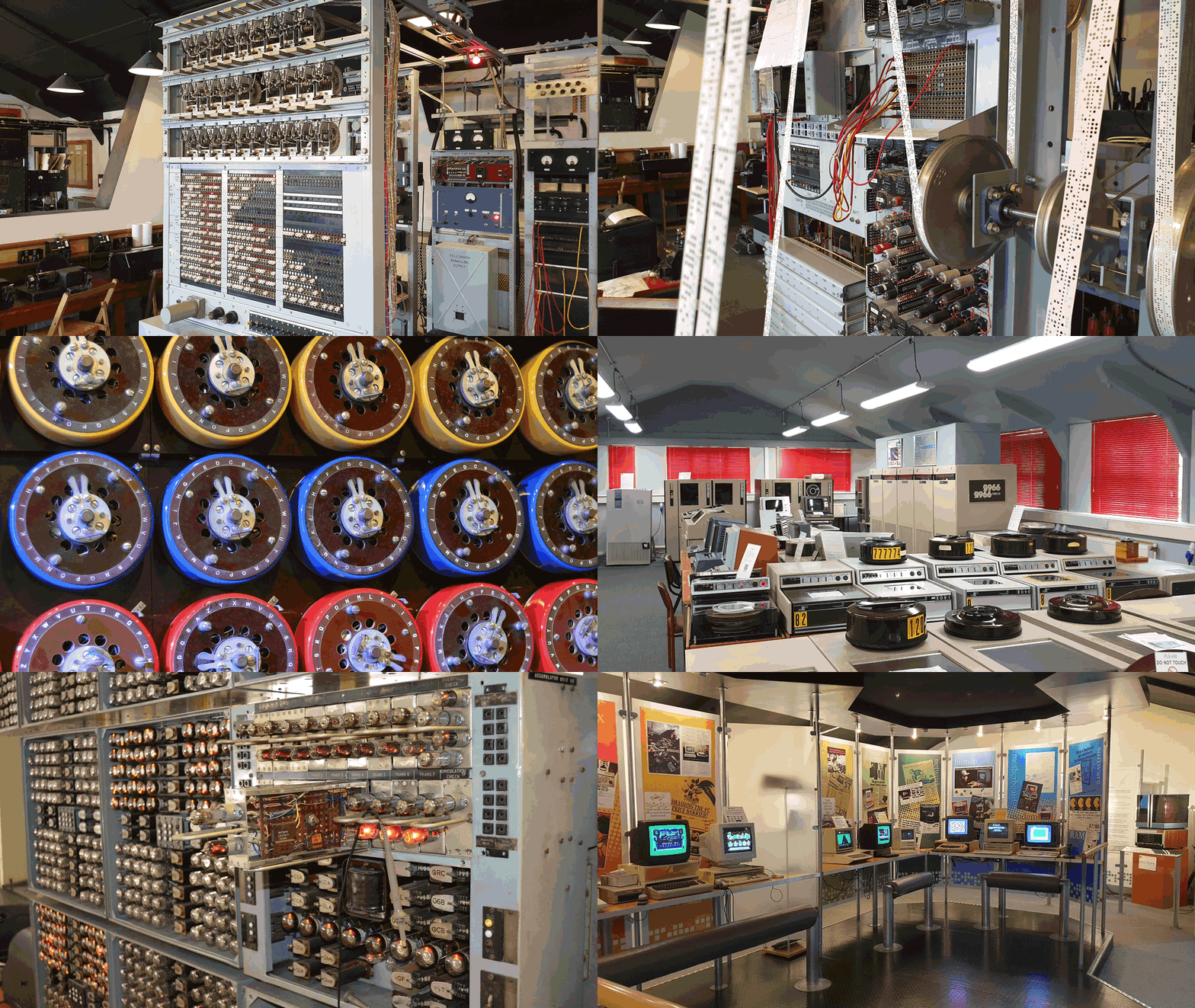
The National Museum of Computing (TNMOC) is home to the world's largest collection of working historic computers.
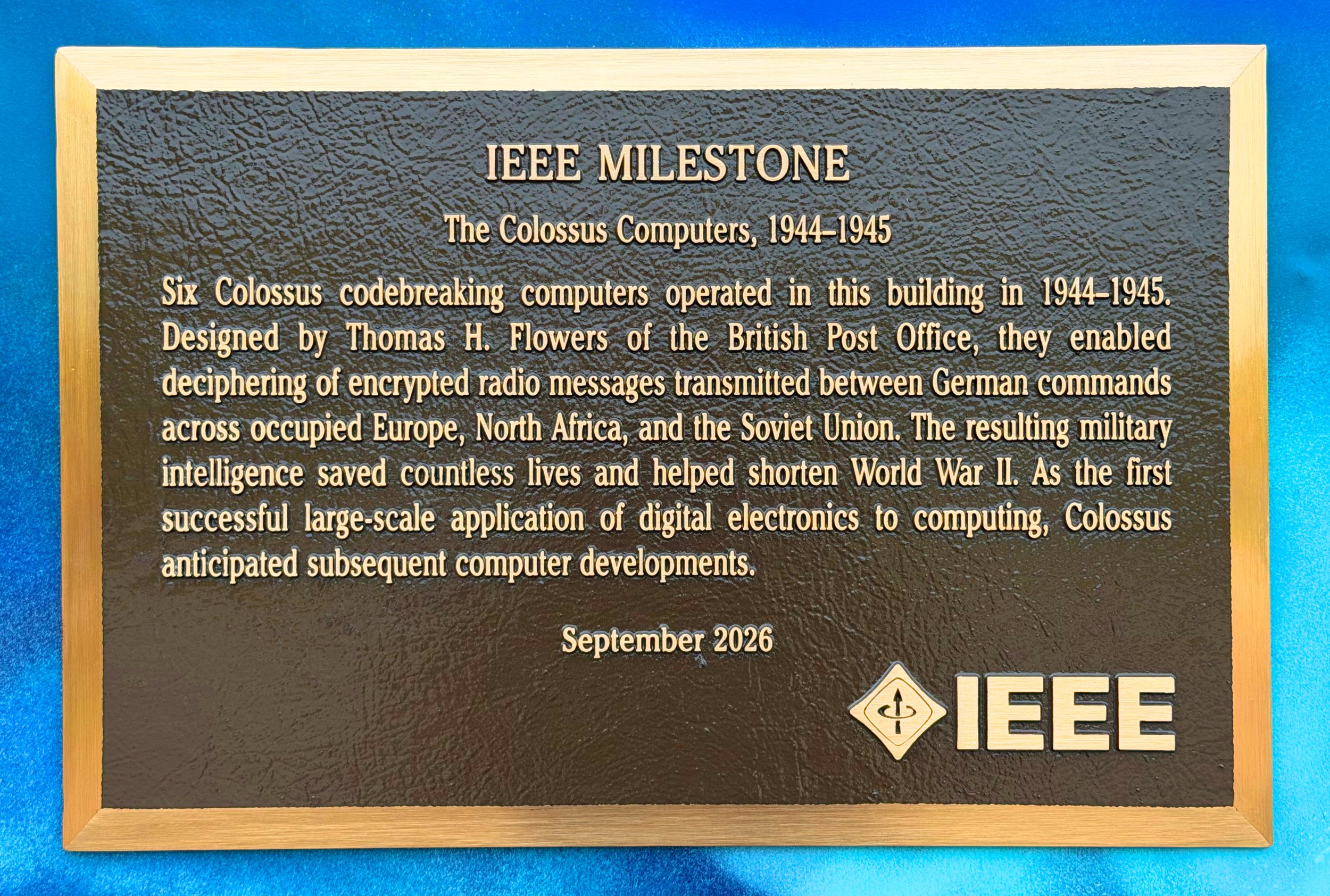
Follow the development of computing: from the Turing-Welchman Bombe and Colossus of the 1940s through the large systems and mainframes of the 1950s, 60s and 70s, to the rise of personal computing and the rise of mobile computing and the internet.
Recognised as one of England’s top 100 ‘irreplaceable places’, we welcome corporate and group visits, schools and individuals from all over the world.
Currently we aim to open to the public Tuesday, Thursday, Saturday and Sunday (10:30am - 5pm) but please check our Days Open page before planning your visit.
In the future we plan to extend to Tuesday to Sunday 10:30am - 5pm (spring/summer), 10:30am - 4:30pm (Autumn/Winter)
TNMOC operates independently of Bletchley Park Trust, although we are located on the Bletchley Park Estate.
To visit us, go through the main Bletchley Park entrance, through the barrier, walk or drive bearing left beyond the main car parks, to our separate entrance located at the top of the Park.
We do recommend you BOOK ONLINE in advance of your visit but we also welcome visitors on the day. Please see the information below.
Click Here For New Retro Gifts
〰️
Jigsaws
〰️
Mugs
〰️
T-Shirts
〰️
Click Here For New Retro Gifts 〰️ Jigsaws 〰️ Mugs 〰️ T-Shirts 〰️
Why not plan a visit to our world leading computing museum? We are open 6 days a week and offer individual, family and annual tickets and we are easy to reach by public transport or car.
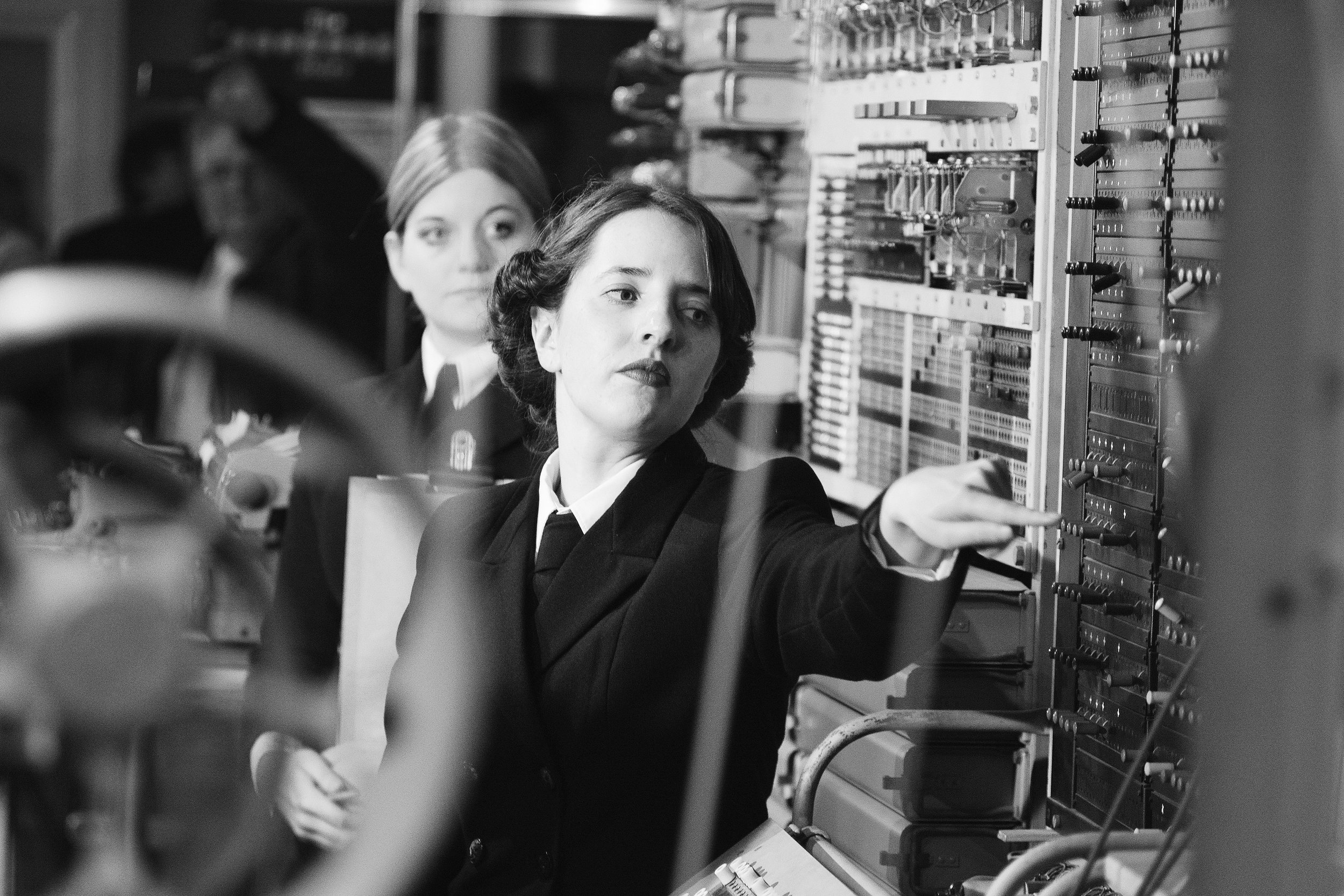
Whether you are a business organisation or a private group of friends, we tailor your group visit to fit your requirements, including time, and you will benefit from the knowledge of one of our highly experienced, trained tour guides.
UPCOMING EVENTS
We have a number of very interesting events and Virtual Talks over the next few months, as well as our very popular Guided Tours in the Museum.
Faced with a series of perplexing puzzles and challenges inspired by computing technology across the decades, you must gather your wits, problem-solving and team-working skills to beat the ticking clock in a thrilling race to the finish line to determine your fate. Prepare to be confronted with alien tools and technology from decades past - paper tape, punched cards and floppy disks to name a few. Designed to please even the most discerning Escape Room hobbyist, our Escape Room Challenges boast the added bonus of educating our escapees on the history of Computing along the way!
Have you got what it takes to 'Escape the Museum'? Take on one of our exhilarating Escape Room Challenges and find out!
As a Museum, we strive to champion, support and enthuse the younger generation in their pursuit of and engagement with STEAM (Science, Technology, Engineering, Arts and Mathematics) subjects. Our new initiative, the Ambassador Kids Programme, aims to offer increased diverse learning opportunities to young people and their families.
Get stuck in with hands-on activities designed to inspire, educate and engage young people and families at The National Museum of Computing.
NEWS RELEASES
Massive congratulations to the winners of The National Museum of Computing’s Atari Art Re-imagined competition, Annabel and Alexandria!
The National Museum of Computing has today announced that the inventors and co-founders of the Raspberry Pi, Eben Upton, and Liz Upton, grassroots community organiser and Executive Director of Communications at Raspberry Pi, are to be awarded honorary fellowships of the museum. The Honorary Fellowship recognises outstanding contributions towards the history and ongoing development of computing, and a ceremony honouring them will be held on the 3rd December 2022.
The National Museum of Computing (TNMOC) has announced its latest exhibition, “BBC through the decades,” to celebrate the 100th anniversary of the British Broadcasting Corporation. Visitors to the TNMOC exhibition will witness the evolution of the technologies that have formed the backbone of the BBC over its history and get hands-on with the technology that made the BBC famous. Exhibition opens on the 1st October.
NOTES FROM THE MUSEUM
NPL installs one of the first UK designed HP 2100A based satellite processing system, £500,000 buys Computer Board 24 Computer Technology Satellite One Model 10 terminals to be used in universities throughout the UK, Honeywell get Customs & Excise approval for their systems for business VAT submissions, GEC-Elliott Automation introduce their GEC 2050 based large-scale information displays to be used at Manchester Airport, the Post Office published proposals for a new high-speed (48K) Packet Switching Network to replace a myriad of slow point to point connections, an Argus 500 will be used to experiment in calculating minimum aircraft separation distances at RAE, A DataGraphics 4460 computer output microfilm (COM) recorder, connected to an existing ICL 4/72 computer will be used by the RAF in it's centralised supplies control system at Hendon, Liverpool expand their traffic management systems based on Plessey XL9s by introducing satellite computers as area controllers communicating back to the 2 existing XL9s, The Army use a mobile Ferranti FM1600B computer are large displays for optical projection and tracking of data, Crosfield Business Machines design new bank note sorters for the Bank of England and Independent Broadcast Authority have developed a new USA/Japan to European standards digital converter for colour TV transmissions.
Brian Aldous – TNMoC Archivist
73 international banks set-up a new message switching network to replace an ageing telex service, GEC-Elliott 905 helps develop fishing net use, DEC launches new ECG analysis systems based on PDP-11 technology, Burroughs introduced the TD 700, a revolutionary new flat-screen display terminal, Cambridge university introduces the first infra-red data transmission link which links their IBM 1130 with a central IBM 370/165 over 1/2 a mile away using a DEC PDP-11/20 as the front-end processor and Eight HP 2116C based gas chromatograph drug detection systems will be used at the Olympic Games.
Brian Aldous – TNMoC Archivist
The French Telemecanique company cools Paris-Orley airport, the RAF places a £1.3Million order for 1,000 Cossor Electronics terminals for their stores management system running on two ICL 4/72 computers, MSI Data Corp introduces ASTROS to revolutionise supermarket check-outs that no longer require entry of product prices, just product codes, BEA starts using the first SITA high speed data link between Rome and London for transmitting seat reservation data, Seaco Computer Display Inc introduces the Model 1601 CRT which aims to revolutionise newspaper phototypesetting, Memorex enters the mainframe business with the release of their IBM compatible MRX/40 and 50 multi-processor computers, GEC-Elliott Traffic Automation use 2 MARCH 9050 computers to control motorway signalling on the M6/M62, DEC introduces the PDP-16M which claims to be 4 times faster than the PDP-8e, IBM help to fight pollution with IBM System/7 based water control and sensing systems, Marconi completes first phase of MARS computer-based message switching system linking Meteorological Centres in Bracknell with other centres around the world and GEC-Elliott Automation launches their real-time GEC 4080 computer for large industrial and military automation and control.
Brian Aldous – TNMoC Archivist
ONLINE SHOP - FEATURED ITEMS
The National Museum of Computing has launched the second in their series of Conway Stewart pens following the success of the Turing-Welchman Pen.
A limited edition of 251 pens in yellow and black, each engraved with its edition number on the end of the barrel, will be produced to celebrate Alan Turing and his work in deciphering the Enigma codes at Station X, otherwise known as Bletchley Park, during WWII.
The Pen
Engraved on the barrel are the words "The Alan Turing Pen" to keep alive the memory of this most ingenious man whose secret activities during the Second World War helped save Europe from Nazi tyranny, and also triggered the start of the computer era.
Around the wide sterling silver cap band is the word "ENIGMA", and there is a secret compartment to hide your secret message - unscrew the barrel end, and there is a compartment to hold a small scroll of paper - your message to yourself, or to your loved one, hopefully written in code!
Available as a Fountain Pen or a Rollerball. (Please note in the rollerball version the end of the barrel does not unscrew for the secret message).
All the fountain pens are fitted with the medium nib. Rollerball pens are fitted with a medium ball.
A proportion of each pen sold is given to the Museum to help with their running costs.
Price includes First Class recorded delivery
During the Second World War, the German Armed Forces sent 1000s of Enigma encrypted messages every day. To crack this seemingly unbreakable cipher, the Allies turned to an electromechanical machine to do the job - the Bombe.
The Turing-Welchman Bombe was a marvel of engineering and ingenuity. The first bombe operated in August 1940 and more than 200 existed by the end of the war. By uncovering the daily ‘key’, as many as 5,000 messages to be deciphered each day.
This remarkable guide explains how the Bombe works in easy-to-understand language and walks you through the entire codebreaking process. With helpful diagrams and photographs throughout, The Bombe is the essential guide to the machine that changed the course of the war.
A signed copy by Sir Dermot Turing is available for a small additional fee.
Buyers from Europe and USA can now purchase the book online by selecting the appropriate item with postage to your area. For all other countries, please Email Operations@tnmoc.org for postage costs.

Faced with a series of perplexing puzzles and challenges inspired by computing technology across the decades, you must gather your wits, problem-solving and team-working skills to beat the ticking clock in a thrilling race to the finish line to determine your fate. Prepare to be confronted with alien tools and technology from decades past - paper tape, punched cards and floppy disks to name a few. Designed to please even the most discerning Escape Room hobbyist, our Escape Room Challenges boast the added bonus of educating our escapees on the history of Computing along the way!
The decades available to choose from are:
1940s: Would you have made it as a successful code breaker at Bletchley Park during WWII? It’s time to find out! Use an Enigmatix, a single wheel poly-alphabetic encryption system which mimics a rotor from the original Enigma machine, to decrypt puzzles and tackle cryptography 1940’s style.
1950s: Wrap your head around a cryptic crossword and take on the challenge of binary addition to reveal a top secret code.
1960s: Get your mathematics brain in gear and read data from punched cards.
1980s: Write a program on a retro BBC Micro.
Vouchers are priced at a rate of £30.00 per person, discounted to £55.00 for a pair. Vouchers are valid for 12 months from the date of purchase. Full Museum admission is included in the ticket price, allowing you to explore and be inspired by our extraordinary collection whilst you are here. The experience will last for 90 minutes. This includes a 15 minute 'Mission Briefing' followed by 75 minutes to complete the Escape Room Challenge.
We run these on a Saturday Morning, Tuesday evening and Sunday afternoons. For Team Events and larger groups contact Jacqui.Garrad@tnmoc.org