Fifty Years Ago .... from the pages of Computer Weekly
/
March 1976 computing, compiled by TNMOC volunteer archivist, Brian Aldous.
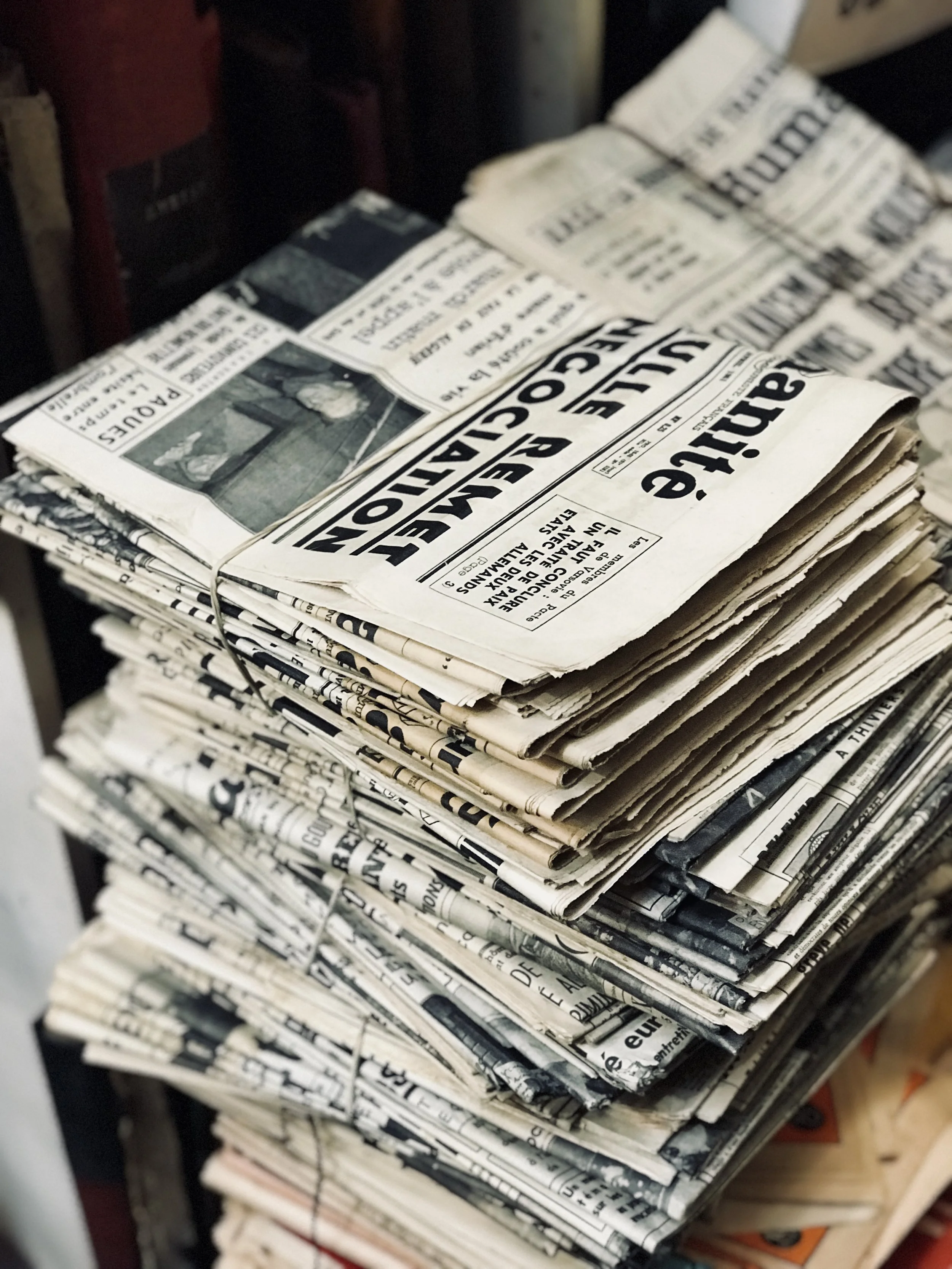
A selection of stories from Computer Weekly from March 1976. The full archive of Computer Weekly can be seen at TNMOC, where there are special rolling displays of front pages from 25 and 40 years ago.
Low-cost version of 4080 mini released by GEC:
A low-cost version of the 4080 minicomputer has been announced by GEC. Designated the 4070, it gives 75 per cent of the performance of the 4080 and is aimed at users who do not really need the 550-nanosecond memory cycle of the 4080. Another development on the 4070 is that the memory, which has an 800-nanosecond cycle time, can be extended from the standard 32K of 16-bit words up to 256K-words, which is twice the capacity on the 4080. The 4070 is fully compatible with the 4080, and the full range of 4080 peripherals, including magnetic tape, drum and disc storage, paper tape equipment, displays and printers are available with the 4070. (CW 487 4/3/1976 p3)
Disc drives with low access times:
A range of fixed head disc drives offering access times as low as 1.25 milliseconds is now available from Sintrom of Reading, Berks. The Alpha Data range is aimed at Digital Equipment and Data General end users as well as OEM customers like systems houses. The Alpha Data drives with capacities between four and 40 Megabytes are built by the Alpha Data Corp of Chatsworth, California, a small firm set up in 1968. The Corporation signed its UK marketing agreement with Sintrom in January at the US Trade Centre show. Alpha Data models are supplied with disc diameters of either 10 or 16 inches. The 10inch drives hold between four and 16 Megabits and the 16 inch units have capacities ranging between eight and 40 Megabits. The number of tracks can be between 16 and 384. (CW 487 4/3/1976 p7)
N-channel M0S RAM from Hitachi:
The latest semiconductor manufacturer to introduce a 16Kbit N-Channel MOS RAM is Hitachi, and the Japanese firm has also launched a 1Kbit RAM based on the emitter coupled logic, ECL, bipolar technology. The 16Kbit NMOS RAM from Hitachi offers an access time of 200 nanoseconds. Hitachi does not quote write or fetch times, which would both be much longer than this. The refresh time is two microseconds. Hitachi follows several US semiconductor manufacturers with its 16Kbit NMOS RAM, and predicts that 16Kbit devices will be used in future computer systems in place of the existing and widely used 4Kbit devices. However, the yields rates for 16K bit devices, in general, are far from satisfactory. The 1K emitter coupled logic, ECL, bipolar RAM completes a range of bipolar memories from Hitachi, ranging from 64 bits to 1Kbits, in ECL and TTL, transistor-to-transistor logic. (CW 488 11/3/1976 p22)
World challenge to EMI brain scanner:
Challenges to EMI’s near-monopoly of the X-ray brain scanner market have come from the US, Germany, France and Japan, as other companies try to cash in on this specialised market which has brought the UK firm £80 million worth of business in four years. EMI’s new competitors are Varian and General Electric from the US, Siemens from Germany, Hitachi from Japan and Compagnie Générale de Radiologie from France. Few details are available on the Japanese scanner, which is apparently still undergoing clinical trials, but the others work on the same general principles and cost roughly the same. The most serious challenge to EMI is likely to come from the two US companies on their home ground. Varian’s scanner incorporates the company’s V70 series minicomputer, and has already notched-up some prestige orders from the UK. (CW 488 11/3/1976 p47)
EPSS packet exchange:
A major step towards the full operation of the Post Office’s Experimental Packet Switched Service was taken at the beginning of the month when packets were exchanged, via the switching exchange in Manchester, by the National Computing Centre and Manchester University Regional Computing Centre. The link was the first to be made using ICL 8790 network interface units, which are built around the 7503 processor. Both the NCC and the university are equipped with an 8790, and the NCC’s unit is to be enhanced by multiplexer facilities so that NCC members can hook on their mainframes and get a taste of the service. The link was made between the NCC’s ICL 1905F and the university’s system comprising a Control Data 7600 front ended by a 1906A. Packets passed through the Ferranti Argus 700 system installed at the Manchester packet switching exchange. (CW 489 18/3/1976 p4)
Paper tape facility to aid small systems designers:
A reader/perforator combination, Model 1315C, which enables small systems designers to add paper tape facilities to their systems at low cost is available from Tally. The unit reads, perforates or duplicates six or eight track paper tape in either roll or fan-fold form and combines two of Tally’s paper tape devices within a single module measuring 19 in x 101/2 in. The unit’s photoelectric reading head is capable of bi-directional reading speeds of 150chps in asynchronous mode or 300chps in synchronous mode. Maximum tape perforation speed is 30chps and the unit features an integral paper tape supply and take-up mechanism. Plug-compatible interfaces are available. The perforator takes up to 1,000 feet of roll or fan-fold paper tape and provides a fan-fold take up of 200 feet independent of the reader tape. (CW 489 18/3/1976 p33)
Sound mixing system to ease engineers’ burden:
One of the world’s leading manufacturers of music consoles for recording studios, Rupert Neve of Royston. Cambridge, has released a computer-based sound mixing system that will, in the words of one sound recording expert, ‘make the studio engineer's life a lot easier, and give a better result’. This statement was made by a spokesman from Air Recording Studios of West London, which will, in October, be the first studio to install the Neve Computer Assisted Mixing System, or Necam as it will be known The system is based on an 8K model LSI 2-10 from Computer Automation. Other equipment involved in the Necam system will be a console, tape machine, floppy disc store, code reader, display board, control panel and transport and control interfaces. Necam permits a great degree of flexibility with the broad multi track magnetic tape being located and recalled at the required points in the music at high speed without being driven against the record head. The ability to locate the tape at specific points is particularly desirable with pop. jazz or progressive music recording where there is no musical score available. The engineer can interrupt the tape over short segments, and the system simplifies the problems of editing and splicing, automatically taking care of the business of joining the tape. (CW 490 25/3/1976 p19)
London tests of EPSS exchange:
Following the successful exchange of packets over the Post Office Experimental Packet Switched Service by the National Computing Centre and Manchester University, the London exchange has been put through its paces by a number of users with different mainframes, network interfaces and terminals. Last week the exchange, equipped with seven Ferranti Argus 700 computers, handled the routing of packets between Queen Mary College, the National Physical Laboratory, the Computer Aided Design Centre, ICL and the Post Office. Network interfaces used included ICL’s 8790, specially developed for EPSS, and an Interdata minicomputer. EPSS is expected to be available in a limited capacity next month, with the linking of the exchanges in London, Manchester and Edinburgh taking place later in the year. (CW 490 25/3/1976 p40)